



[ad_1]
Sure! Here’s a rewritten version of your content, maintaining the HTML tags:
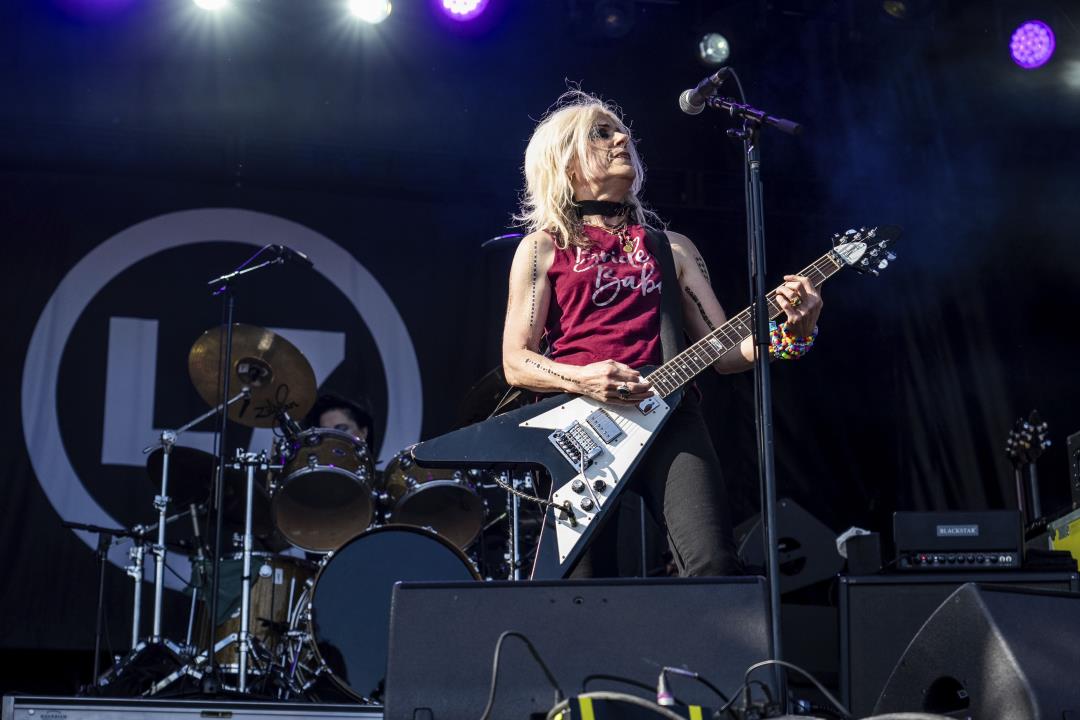
Quick! Think of a ’90s grunge icon. Chances are you named Kurt Cobain, Eddie Vedder, Chris Cornell, or another brooding white male. But flannel is for everyone. In a Longreads article, Lisa Whittington-Hill examines how women in grunge were often “treated like a fad,” leading to their impactful contributions being minimized or overlooked. Bands like L7, Babes in Toyland, and 7 Year Bitch brought just as much intensity—and often earlier—than their male counterparts. Yet when Nirvana’s Nevermind skyrocketed in 1991, media attention gravitated towards the guys. In the 2016 documentary L7: Pretend We’re Dead, L7 bassist Jennifer Finch displayed a magazine cover of her ex, former Nirvana drummer and current Foo Fighters frontman Dave Grohl, stating, “Everywhere I go, everywhere I turn, I see this f****ing face.” Meanwhile, her own band’s acclaimed 1992 album Bricks Are Heavy barely reached No. 160 on the Billboard charts.
Even when female-led bands broke through, they still faced dismissal or marginalization by the media. L7’s 1993 Spin cover featured the phrase “More Than Babes in Boyland,” which trivialized two influential bands and sparked a girl-group rivalry. “We did not want a gender-specific label,” stated singer Donita Sparks. “Our identity as women was not a political statement.” Additionally, “riot grrrl” bands—feminist punk groups like Bikini Kill and Sleater-Kinney—experienced even harsher treatment: They were often reduced to mere fashion trends, ridiculed, or asked solely about their traumas. “[Journalists] refused to conduct serious interviews with us,” noted Corin Tucker of Sleater-Kinney.
In the meantime, women of color were virtually erased from the narrative. Tina Bell, a Black artist who led Seattle’s Bam Bam, played a key role in shaping the grunge sound in the early ’80s, yet is frequently overlooked in retrospectives. “The sound of this modern genre was significantly influenced by a Black woman,” points out Stephanie Siek in a piece on Medium. “Her obscurity results largely from racism and misogyny.” These exclusions persist, even as grunge becomes a nostalgic pop culture phenomenon with 30th anniversary celebrations, reissues, and more. Whittington-Hill emphasizes that not one woman was included in Rolling Stone‘s 2012 readers’ poll for the best grunge albums ever. Women were often only “granted legitimacy based on their association with more successful male musicians,” she asserts.
story continues below
While Cobain and Vedder received accolades for their progressive politics, the women who informed their perspectives—like Kathleen Hanna, Tobi Vail, and others—seldom received recognition. Three decades later, the grunge narrative may still require substantial revision. However, as Bratmobile vocalist Allison Wolfe stated in a 2021 Guardian article, it was never solely about being female in a male-dominated genre; it was fundamentally about making one’s voice heard. “It was about paving the way for expressing ourselves,” she shared. “And knowing that even if we lacked musical prowess, we had something to say that was far more engaging than much of the stuff these guys were putting out.” (More music stories.)
[ad_2]
Source link