


[ad_1]
At its core, very few songs can be categorized as truly spine-tingling. Yet decades after its debut, one particular track consistently evokes chills with each play.
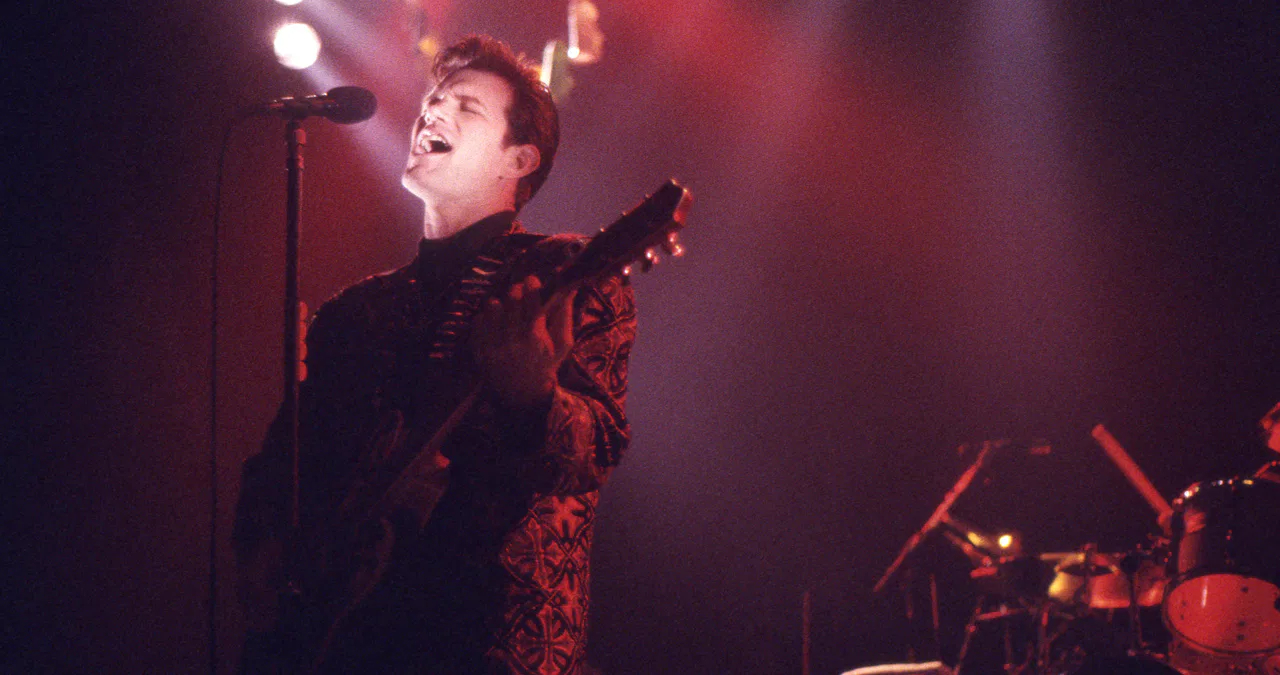
With a perfect blend of intensity and vulnerability, Chris Isaak’s eternal masterpiece, Wicked Game, continues to enchant new listeners today.
The lyrics portray a misguided romantic entanglement, while Isaak lifts the intimacy of the chorus with an evocative high falsetto.
The song’s reverb-soaked guitar lines, played by James Calvin Wilsey (known as the ‘King of Slow’), further craft its desolate and expansive ambiance.
Despite its evident brilliance, Wicked Game’s unique value was initially overlooked by both Isaak and his band, who struggled to grow their fanbase beyond a dedicated few.
Fortunately, fate intervened in the form of filmmaker David Lynch…
The Song:Chris Isaak – Wicked Game
The Magic Moment: Isaak’s breathtaking falsetto during the chorus starting at 01:08, paired with Wilsey’s emotive guitar work throughout the track.
Originating from Stockton, California, Chris Isaak aimed to encapsulate the styles of early rock ’n’ roll, surf rock, and rockabilly, paired with a nostalgic, crooning vocal style.
However, gaining traction in the 80s, dominated by the mega-pop of Madonna, Prince, and Michael Jackson, felt nearly impossible.
“I aim for the 80s’ sound,” Isaak mentioned to Absolute Sound in 1987. “I think going back to sound like a 50s’ recording… Some aspects of our sound are indeed vintage or classic – the vocals are prominently featured, offering plenty of space for the guitar, with echoes that are grand and clear.”
While his 1985 debut Silvertone and its follow-up were filled with remarkable tracks, only a limited but loyal audience really listened.
Isaak often spoke to radio DJs, pleading for airplay. Despite their assurances of being fans, they regretfully conveyed that their superiors prohibited playing niche material like his.
This type of genre-snobbery created an unfortunate cycle of limited exposure.
Perhaps a substantial audience was out there, eager to embrace Isaak’s brand of haunting Americana – but how would they discover it?

Knowing his third studio album, Heart Shaped World, required substantial effort, Isaak and his band (also called Silvertone) knew they had to elevate their game.
With veteran producer Erik Jacobsen from Lovin’ Spoonful, Isaak crafted the strongest collection of songs he had yet. With his core rhythm section, Kenney Dale Johnson (drums) and Rowland Salley (bass), the standout feature was Wilsey’s meticulously crafted, expansive guitar sound that elevated this new batch of songs.
Having previously played a significant role in the San Francisco punk scene, Wilsey joined Isaak early on, seeking new challenges.
He transitioned from power chords to a reverb-heavy, treble-rich tone he dubbed ‘nitro twang’, which became a sublime match for Isaak’s increasingly dark vocals.
While the third album was shaping up well, the song that would change their fate appeared almost spontaneously. Almost as if it appeared from nowhere…
Chris described the song’s concept coming to him in just fifteen minutes. “At around 4 am a girl called, saying she would come over,” Isaak recounted to the Rock & Roll Hall of Fame. “Right after I said yes, I thought, ‘Why did I let her come over? I know what’s going to happen.’”
Feeling anxious about the impending physical and emotional entanglement, Isaak wrote most of the song in the few minutes between hanging up the phone and her arrival at his home.
“It’s about the inevitability of attraction to those who may not be the best for you,” Chris shared.
Though the foundation of the song emerged quickly, perfecting the arrangement and feel required more time.
Numerous versions of the track were recorded, each at different tempos and conveying distinct moods.

Yet, as various live performances were recorded, Jacobsen, Silvertone, and their engineering team moved to a smaller studio (Dave Wellhausen Studios) to begin the slow process of putting the final mix together, utilizing combinations of previously recorded takes and early MOTU software to assemble the final track.
Crucial to this process was Isaak’s decision to employ a Roy Orbison-style falsetto on the word ‘I’ in the chorus.
This soaring vocal captured the fragility of the uncertain narrator perfectly, and the intimacy was amplified by using a Sanken C-41 microphone.
No, I don’t wanna fall in love
No, I don’t wanna fall in love
With you, with you
The track’s other vital component, Wilsey’s guitar, intricately outlined the expansive landscape Isaak inhabited, its reverb and delay-filled sound evoking a sense of vastness.
Wilsey recalled Isaak initially being uncertain about his guitar concept; “Chris played me that song, and it was quite basic, with only a few lines. I thought, ‘This is nice, I can contribute,’” Wilsey remarked to Rhythms Magazine. “A few days later, I came up with an intro riff and other parts. I felt good about it. It was one of the few times I felt completely sure. Chris wasn’t convinced at first, believing it sounded somewhat off-key.”
Once the riffs were finalized, Wilsey focused on achieving the perfect expansive guitar tone.
Using a 1964 Fender Deluxe amp, he recorded with a Shure SM57 and processed the signal through a TC Electronic 2290 for pre-delay before routing it to an Eventide H3000 (set to the Rich Chorus preset).
As described on the Steve Hoffman forum, this created his signature quarter-note, triplet delay. Engineer Mark Needham would adjust this within the studio.
The combination of this effect layered over Wilsey’s riffs produced an emotionally charged yet sexy sound, encapsulating both anguish and desire.
The result was stunning. It became the highlight of Isaak’s strongest album to date.
However, much to Isaak’s surprise, he initially overlooked it as the album’s lead single, giving that honor to the decent but lesser track, Don’t Make Me Dream About You.
Wicked Game was eventually released (without a music video) on July 14th, 1989, but it had already begun trailing the more forgettable parent album released the previous month. Despite critical acclaim, Heart Shaped World was landlocked at the lower end of the Billboard Top 200.
Compounded by the same airplay issues, Wicked Game remained largely unheard.
This was a familiar situation for Chris.
Yet, during live performances, audiences began to take notice of this 4 am ballad.
“Everywhere we performed, people seemed to pay attention during that song,” Isaak shared with Steve Pafford.
Despite Isaak’s entreaties to his label (Warner’s Reprise) to produce a music video, they showed little interest in financing it.
That could have been the end for this timeless track, had it not been for the extraordinary involvement of David Lynch.
Lynch had been captivated by Isaak’s nostalgic sound for years and had previously featured his music in the iconic film Blue Velvet. He too shared a similar sense of timelessness.
While seeking fresh Isaak material for his upcoming film *Wild at Heart*, starring Nicholas Cage and Laura Dern, he sifted through Heart Shaped World.
Instantly recognizing Wicked Game as a standout track perfect for his unique romantic narrative, Lynch sought permission to use it (along with another track from Heart Shaped World, Blue Spanish Sky) throughout the film.
“It’s very soulful and creates a particular mood,” Lynch told MTV in 1990, explaining why he opted for an instrumental version of the song; “Using lyrics in a film can conflict with dialogue.”

Entranced by the song, Lynch financed the production of a music video for *Wild at Heart*, featuring Isaak and his band, intertwined with clips from the film.
Firmly established within Lynch’s eclectic filmography, Wicked Game began to gain traction.
Lee Chesnut, music director at Atlanta’s WAPW radio, began airing it repeatedly. Before long, thousands of listeners were captured by the track’s allure, propelling this once-forgotten single back onto the charts.
Isaak soon recognized that with the right promotion, he could finally grasp that elusive hit he’d long sought.
Collaborating with photographer and occasional director Herb Ritts, Isaak cast supermodel Helena Christensen in a provocative new video, which underscored the song’s themes of doomed romance. Christensen’s nearly naked appearance and closeness with Isaak created an electric atmosphere.
“People assumed we were involved,” Isaak reflected to the Rock & Roll Hall of Fame. “[Helena] was incredibly beautiful. While it might seem romantic in the video, in reality, we were on a beach, and they were dumping buckets of cold seawater on us to keep us wet. It was chilly; she was just shivering away.”

Having captured the perfect visual accompaniment, Isaak remained doubtful regarding its potential on air. “I just don’t believe it’ll be provocative enough for them to air,” he expressed to Ritts, concerned that the frequent focus on himself would be ‘dull and poor’.
As history shows, Isaak couldn’t have been more mistaken.
The song exploded in popularity, and its risqué video captured the spotlight on MTV, cementing its status as a cultural phenomenon.
The single surged through the charts and, after more than a year since its initial release, became a top 10 hit in the US and worldwide by March 1991. What a remarkable turnaround.
Even now, Wicked Game remains captivating. Perhaps due to its timeless themes and intriguing undertones, the song maintains its seductive charm while others have faded away.
The song’s exploration of an enticing yet wrong pursuit resonated with many listeners grappling with similar feelings of guilt.
“I believe it struck a chord because many of us feel drawn to people who aren’t necessarily good for us,” Isaak reflected.
[ad_2]
Source link