



[ad_1]
Sure! Here’s a rewritten version of the content while keeping the HTML tags intact:
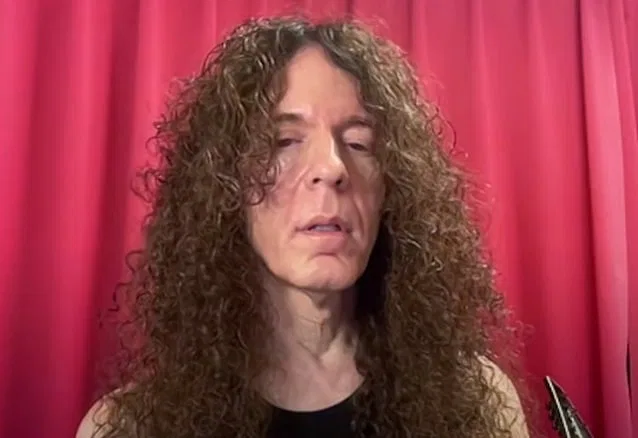
In a recent chat with Bradley Hall, Marty Friedman shared his thoughts on guitarists who play fast for mere show. The former MEGADETH guitarist remarked (as transcribed by BLABBERMOUTH.NET): “I’m not against anything flashy at all. What I really seek is excitement in the music I hear. When something cool, fast, and exhilarating lands at a crucial moment in a song, it gives me chills. It’s all about where these elements are placed and their originality. Sometimes, even a well-worn lick, in the right context, can strike you as ‘Wow, bravo!’ You know what I mean?
“I have always appreciated flashy elements ever, and my perspective on playing hasn’t changed since those early days,” he continued. “But I believe everything should carry a definite meaning and purpose. When something hits just right, it resonates with me while I’m playing it. In contrast, if someone shows off their best licks one after the other—bam, bam, bam—it loses its significance, as it’s merely a display of practiced techniques. You can feel the guitarist’s life in their music. If you envision someone stuck in front of a metronome, that’s not particularly appealing, right? But if you hear an incredible section that takes an unexpected turn, that’s the kind of flashy magic I truly admire, and I’ve always pursued that. Sometimes I succeed, sometimes I don’t, but that’s my goal.”
When asked about Tim Henson, lead guitarist of the progressive band POLYPHIA and acclaimed as one of the top guitarists globally, Marty responded: “Absolutely. I toured with them in Asia—they’re an incredible band with phenomenal guitar work. I really appreciate much of what they’re doing.” He also mentioned other newer guitarists he admires, saying: “My friend Ichika Nito is an astounding guitar player and composer; his writing is superb.
“A while back, I moved past just being impressed by guitar skills,” Marty added. “What I seek is music that captivates me. There are excellent guitarists everywhere, but can they create appealing music that compels me to want to listen? Technical skill is somewhat expected, but artists like Ichika Nito are exceptional. Who else? There are countless talented individuals I’m likely forgetting. Mateus [Asato] from Brazil is a fantastic player. The list goes on for both men and women in this field.”
Back in June 2021, Friedman shared his displeasure at being labeled a “shredder.” In an interview on Kylie Olsson‘s YouTube show “Life In Six Strings”, he explained: “To me, it implies mindless speed. In the early parts of my career and even now, sometimes things may sound fast due to the unusual choice of notes, causing them to register differently in your mind. Playing familiar note sequences requires extreme speed, like two hundred beats per minute, to come off as fast. If you simply run a scale up and down, it might sound quick. But with unconventional groupings, subdivisions, and melodic decisions, the tempo can seem swift, even if it isn’t very fast; it’s just unfamiliar and unexpected to the listener. People assume it’s fast because trying to replicate it can be difficult. There’s a clear difference between speed and complexity.”
He continued: “This term often resonates with young guitarists, but it doesn’t reflect reality. Many young guitarists, myself included as a child, are fascinated by skills they haven’t yet mastered, particularly speed when starting out. When you see someone across the street shredding, you wonder, ‘Why can’t I do that?’ It becomes a kind of holy grail for newer guitarists. These enthusiasts actively engage in online communities, purchase magazines, and gear, unknowingly fueling the industry. They are captivated by rapid finger movements, yet they don’t realize that playing slowly is vastly more challenging. Truly, it is. Slow playing separates the talented from the mediocre right away; you can gauge skill instantly. Fast playing? Even young kids can achieve it with great clarity. This creates an illusion, but it keeps guitars selling. Aspiring players see this speed and think, ‘I want that so badly.’ Great. After some practice, they achieve it. But what’s next? I dislike being grouped in with those who play fast for its own sake, as many merely produce noise.
“Fast playing was exciting when I first picked up the guitar, but the novelty fades quickly once you master it,” Marty remarked. “Eventually, the focus shifted to creating interesting music, not on speed—for me, tempo, whether slow, medium, or fast, is irrelevant. Every tempo exists in music; every single tempo. I just prefer not to be categorized that way. However, if you love shredding and consider me a shredder, and enjoy my music, I’m all for it. It’s all good. Terminology aside, what truly matters is whether you appreciate the music. Call me anything you wish, as long as you enjoy what I create. And even if you don’t, it’s still fine.”
Friedman‘s latest solo album, “Drama”, was released in May 2024 through Frontiers Music Srl.
Marty first made waves in the music scene with the revolutionary guitar duo CACOPHONY, which he co-founded with the now-legendary Jason Becker. Following that, he spent a decade as the lead guitarist for the influential thrash metal band MEGADETH before relocating to Tokyo, driven by his passion for Japanese music, language, and culture.
After moving, he secured a prominent role in the new TV comedy “Hebimeta-san” (“Mr. Heavy Metal”) and its spinoff, “Rock Fujiyama”, which aired for six seasons and brought him into the homes of mainstream Japan. Since then, he has appeared in over 800 television shows, films, and commercials, including a two-year campaign with Coca-Cola for Fanta, authored two bestselling novels, and was the first foreigner to be appointed as an ambassador of Japanese heritage, performing at the opening ceremony for the Tokyo Marathon.
Simultaneously, Marty has continued to pursue music, releasing several solo albums while collaborating with top artists in Japanese music, achieving numerous chart-topping hits, including a No. 1 with SMAP, two No. 2 hits with MOMOIRO CLOVER, and a No. 2 with SOUND HORIZON—among others.
Friedman‘s memoir, “Dreaming Japanese”, was published on December 3, 2024, by Permuted Press.
Let me know if you need any more help!
[ad_2]
Source link