


[ad_1]
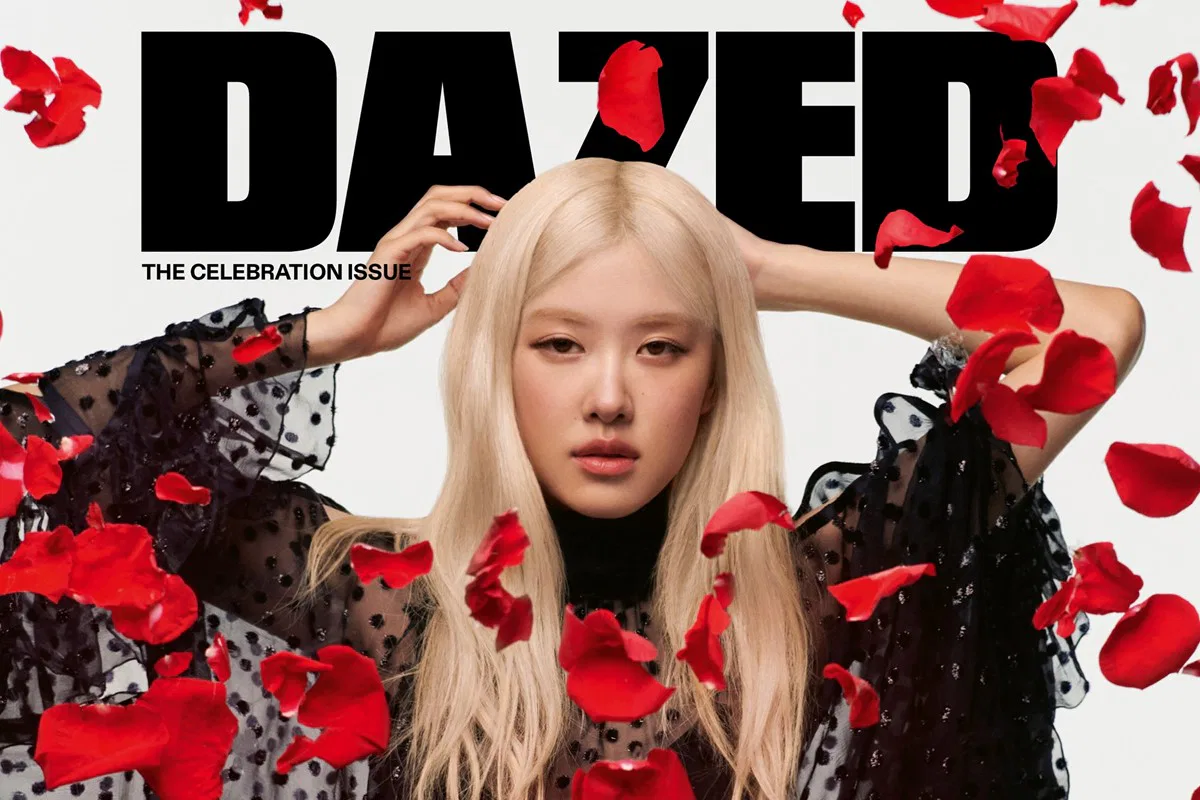
Rosé – The Summer 2025 Issue9 Images
Many pop stars begin their journey as avid fans. With a mix of determination, agility, attractiveness, and a sprinkle of luck, they ascend to become the icons they once idolized. However, Rosé, one of the world’s leading pop stars, never experienced that superfan phase. “See, that’s a significant part I don’t think I got to experience,” she shares.
Born Roseanne Park to Korean immigrants in New Zealand and raised in Melbourne, Australia, she didn’t have posters of pop idols adorning her walls. She never inundated an idol’s Weverse, crafted homoerotic fanfictions, or stood in long lines for concerts. Her true education in music and its culture only began at 16, just before she was sent off to a training camp in South Korea. The boot camp’s regime echoed the methods of 1960s Motown and the Brill Building pop scene in the US. She was only introduced to K-pop by friends and her sister shortly before her departure. “Then I flew to Korea and practiced in a basement for four years.” From there, she emerged a pop sensation.


During a fitting break in Seoul, Rosé’s captivating charm, known in Korean as maeryeok, shines through. She’s warm in her smile, attentive in her listening, and expresses affection with hand heart gestures. Instantly likable, she wears a relaxed white tee paired with a dark navy hoodie, with her braided hair styled just right. Making a point to lean comfortably against a neutral-colored couch, she embodies the aspirational style that many dream of.
Throughout our conversation, she occasionally coughs, each interruption polished: a three-beat hack-hack-hacks into her hoodie, topped off with a courteous, “I apologize, I hope this isn’t annoying.” She’s recovering from a mild illness after a week spent with family (including Hank the dog) and a couple of surprise performances with Coldplay at Goyang Stadium, the venue where she’ll join BLACKPINK for their world tour opener in a few months. Having observed significant vocal rest, she passes the time with silent Scrabble games and has taken up learning sign language. “It’s really fun,” she states.
Her experiences with Coldplay, a band that embodies love and harmony, revitalized Rosé for the forthcoming tour. From the sidelines, she observed fan interactions with each confetti drop and lighting shift. “It gave me a fresh perspective on the group experience,” she remarks, a perspective she feels she lacks.
Each of us [in BLACKPINK] has ventured out, gathering inspiration and self-discovery, and now we return to one another with vibrant energy.
BLACKPINK stands as her most stable creative partnership. Their upcoming world tour follows a year where each member explored solo ventures, uncovering their identities beyond the collective. Rosé utilized this phase to deepen her honest expression, transitioning away from BLACKPINK’s intense showcases towards a more intimate style. Surprisingly, returning to BLACKPINK was smoother than anticipated.
After exposing her solo artistry and promoting her album in the US, she’s now easing back into familiar rhythms. “Each of us has explored, learned, and now we unite with positive energy,” she shares. Although she maintained connections with Jisoo, Jennie, and Lisa throughout the year, reuniting with the BLACKPINK team, many of whom have been there since the inception, stirred emotions. Tears welled in her eyes during this fitting.
As I delve deeper with BLACKPINK-related questions, she opens her mouth slightly and bites her tongue, displaying a blend of patience and amusement as she sidesteps some inquiries. Approaching May, rehearsals for their tour haven’t begun; she gracefully interjects, “Sorry, I don’t think I should be the spokesperson as one quarter of the group.” Disheartened, I refrain from pressing further, scratching out my list of questions about albums and additional tour dates. “I’m afraid I can’t tell you,” she concludes.
Reflecting on her working life, Rosé admits that it’s challenging to separate her personal life from her career. “Recently, it’s been tough to – what’s that word in English? –detach myself from my work and my life.” She has decided to abandon any guilt over the work-life balance issue. “I’ve always felt bad about bringing work home, but if your passion consumes you until you sleep, that’s fantastic. It shows you love what you do. Even when I’m not working, my mind is always on it.” Every moment is filled with potential material for her to craft into songs.
She blurred the lines between personal and professional with last year’s solo album Rosie, which explored themes of romantic vulnerability and dependencies. It revealed her fixation on love, just as much as her career. Trading BLACKPINK’s uncompromising success for emotional exposure, insecurity, and obsession, she articulated this on tracks like “not the same.” The relatable lyrics facilitated a collective emotional journey with one of the planet’s top pop stars. Having mastered performance and choreography, Rosie became her platform to embrace vulnerability. “That was the biggest reward I gained,” she reflects. “I feel I’ve learned to sit comfortably with myself, and I am truly happy about that. It’s a valuable tool I’ve embraced.”
Rosie demonstrated the big-pop spectacle expected of a K-pop star, yet it resonated in both England and America, largely thanks to the irresistibility of “APT.” At a time when pop stars promised to “bring fun back to music,” “APT” genuinely delivered a year’s worth of joyous vibes. With its catchy hook –ap-uh-tuh-puh-tuh – and infectious energy, it graced prime-time Radio 2 playlists and became the soundtrack of TK Maxx stores. Rosé’s fan base has grown from just the younger siblings to include everyone from grandmothers to babies.
Recently, it’s been tough to – what’s that word in English? – detach myself from my life and my work.
Rosie, while tempering K-pop’s usual excesses, melded seamlessly into the mainstream pop landscape. Bang Si-hyuk, chairman of Hybe, BTS’s agency, stated at a US pop culture conference last year that “for K-pop to gain more fans in the global market, it needs to be experienced as part of pop music, requiring expansion in both form and content.” Rosie fulfilled that vision, propelling Rosé’s rise beyond Korea. Her landmark album became the best-selling by a K-pop artist in the US, achieving a spot atop Billboard charts and approaching six billion streams. By year-end, Rosé sought to dissolve her copyright trust with the Korea Music Copyright Association for greater global expansion.
Now distanced from her solo album rollout, Rosé evaluates Rosie based on her personal standards. “Whenever I create something, I always ponder, ‘Have I done everything I intended to? Is there more I could give?’” Reflecting on this album, she asserts, “I couldn’t have given more.” She poured her “heart, soul, and beyond” into the project.
Such strong work ethics are likely rooted in her mother’s influence. “I’ve observed her dedicate herself fully to everything she takes on,” Rosé mentions, “whether it’s caring for me or in her art.” Watching her mother meticulously apply paint to canvas during her childhood left a lasting impression. “It was amazing to witness her artistry grow.”
In her childhood, her parents communicated almost solely in Korean. It wasn’t until she was three, and began kindergarten in Auckland, that she started using English. She picked it up naturally, rolling her Rs – a distinctive trait in Korean phonetics where consonants are softened. Today, those two languages create unique textures and nuances in her vocal delivery. The Korean sounds light and gentle, while the English feels thicker and sharper. After a year in the US, she notices a shift in her speech, noting, “Recently, someone asked me, ‘How do you speak in Korean?’ It felt like an entirely different person speaking.” She’s even considering learning another language, likely more Japanese: “If I learned that more, I might have a totally different personality there too.”
Beyond language, I’m curious how Rosé aligns typically American values of vulnerability with Korean concepts likeinseong gyoyuk (humility and loyalty), yet she offers tactful responses, generally favoring a universal narrative. “We’re all human, and similar emotions spark and mend our feelings,” she suggests.
With her American publicist and Korean team member present, she sounds understandably cautious. “Words are forever,” she states. When asked about Grammy aspirations following her album’s success, she reflects, “That would be…” peering around, collecting her thoughts before continuing, “That would be phenomenal. But if it carries more meaning for my community, that’s what I truly desire. Recognition after that would just feel like a bonus.” This answer may come off as rehearsed, yet it seems sincere.
If you work until you sleep, that’s wonderful. It means you’re passionate about what you do. Even when I’m not working, my mind is always engaged.
I pose a few more benign questions, but she struggles to answer them, like who her favorite One Direction member is. “I do,” she says, “But I know this could stir headlines, so I have to be careful. It may lead to drama.” I wonder if she means Zayn, but let it go. I also inquire whether she will remain in Korea or return to the US, but again, she can’t specify. “I’m sorry, I don’t think I should share my whereabouts,” she says, her expression turning somber. “See, these considerations now consume me; it’s surreal.”
As someone with the means to access nearly anything—like a burger—does she miss the feeling of longing? “It’s fascinating because I might get a burger whenever I crave one. Yet, it invokes various restrictions beyond that,” she responds. “For instance, not feeling paranoid about trivial things. Not being that friend who’s overly cautious when I want to be relaxed, but I have to remain vigilant. Even without wrongdoing, I must consider, ‘What if this gives the impression that I’m in the wrong?’ It’s about avoiding the constant anxiety of being misunderstood. What a burden on my sense of freedom.” When I ask her to define what freedom looks like to her, she reflects, saying, “Freedom means being unrecognized.”
Previously, Rosé even made bold attempts to experience anonymity by hiring a team to transform her into an elderly version of herself, complete with prosthetics and a grey wig. She ventured out in that disguise, hoping to grasp the sensation of invisibility. Yet, the outcome was heightened paranoia, suspecting that people could see right through her charade and recognize her. “It was incredibly intense,” she recalls, “and I don’t think I’ll ever do that again.”
I inquire whether she might consider acting as a means to escape her identity for a while. “Wow, yes, that sounds amazing,” she replies. This brings to mind her recent experience speaking at a corporate event in Europe, where she introduced herself as “Rosie,” delivered a few lines, and then faced one of her greatest fears: traversing a crowd. “I was so anxious because usually, when I walk through crowds, I anticipate recognizing looks. But I walked through a gathering of European businesspeople, and no one seemed aware. It felt euphoric,” she exclaims. “So yes, I would love to act; it would allow me to experience what it’s like to be invisible.”
She purses her lips, glancing sideways. For now, she watches from the periphery, contemplating what it means to blend in as just another member of the audience.
Hair LEE SEON-YEONG, makeup WON JUNGYO at BIT&BOOT, nails PARK EUNKYUNG, set design IBBY NJOYA at NEW SCHOOL REPRESENTS, prop stylist KIM SOJUNG, photographic assistants YANG HAYOUNG, KIM YOUJIN, KIM YOUNGWOO, hair assistant LEE SEUNGYEON, set design assistants SEO JIWOO, LEE EUNSU, florist LEE SOHYUN, lighting and digital operator SHIN YOUNGJAE, production KELLY SUH at A PRJECT, production coordinator INDIGO CHOI, production assistants KIM GITAE, LIM JAEWOO, post-production TOUCH DIGITAL, special thanks SAM ROSS and PHOEBE SHARDLOW at NEW SCHOOL REPRESENTS
[ad_2]
Source link