



[ad_1]
Here’s a rewritten version of your content while preserving the HTML tags:
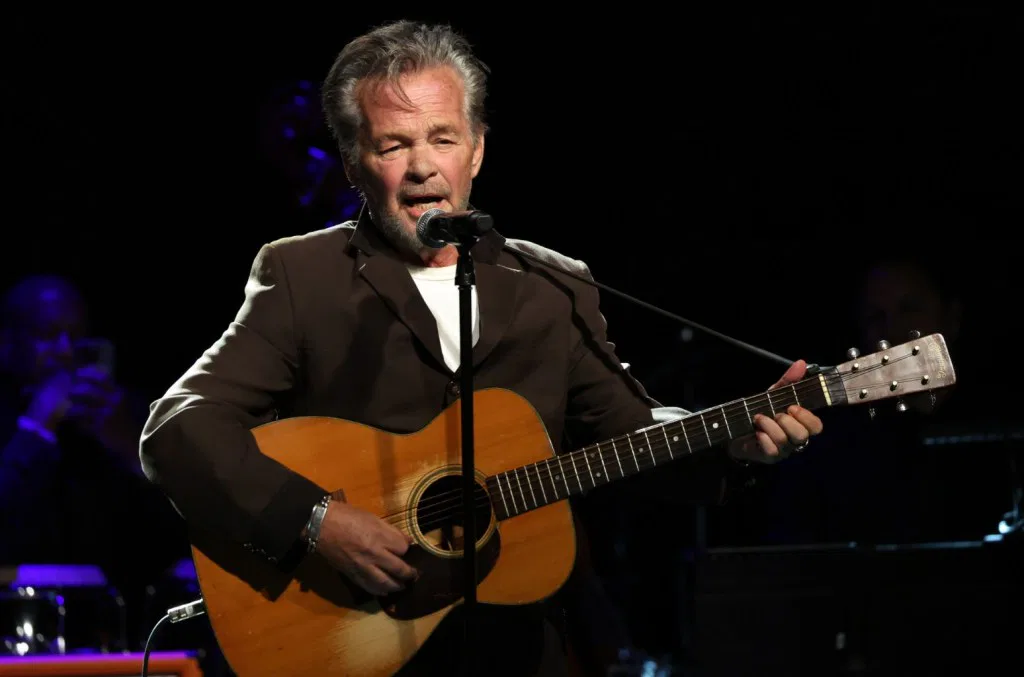
In 2014, John Mellencamp entered into a lifetime recording contract with Republic Records, showcasing the wisdom of this investment during his captivating performance at the second annual Grammy Hall of Fame Gala. This prestigious event took place on Friday night (May 16) at the Beverly Hilton Hotel in Beverly Hills, California, the same venue as the inaugural Grammy ceremony in 1959.
Mellencamp took part in a tribute to Republic Records, the honoree of this year’s gala. Conan Gray also performed his hit “Heather” from 2020 as a part of the tribute. Unfortunately, Muni Long, who was expected to join the performance, did not appear. Last year, Atlantic Records was honored during the inaugural Grammy Hall of Fame Gala at the Novo Theater in L.A. Live.
The Grammy Hall of Fame Gala, co-hosted by the Recording Academy and the Grammy Museum, was established to elevate the profile of the Hall of Fame inductions, which previously were announced with minimal fanfare. Founded by the national trustees of the Recording Academy in 1973, the Grammy Hall of Fame was initially intended to honor recordings released before the Grammy Awards began in 1959. The criteria were later expanded to include any recording that is at least 25 years old.
While it used to be the only major award recognizing classic recordings, the introduction of the National Recording Registry by the Library of Congress in 2002 means the Grammy Hall of Fame now shares this honor.
Though not its primary aim, the Grammy Hall of Fame offers a chance for the Grammys to honor albums they may have overlooked when initially released. This year’s 13 inductees included 11 recordings issued after the Grammys started. Out of those, only two — Santana’s Supernatural (1999) and Emmylou Harris’ Wrecking Ball (1995) — had previously won Grammy awards during their eligibility. Only one other — Luther Vandross’ Never Too Much (1981) — had received a nomination.
The inductees are chosen each year by a member committee and must receive final approval from the academy’s national board of trustees. With these 13 new titles, the Grammy Hall of Fame now includes 1,165 inducted recordings. A comprehensive list of past inductees can be found here.
Artists had the option to participate in the Grammy Hall of Fame Gala as much or as little as they desired. Harris performed two tracks from Wrecking Ball, while R&B icon Eddie Floyd delighted the audience with his classic hit “Knock on Wood.”
Carlos Santana, honored for Supernatural, and Yusuf, known previously as Cat Stevens, who was recognized for his 1970 album Tea for the Tillerman, shared acceptance speeches via video. Santana expressed gratitude to Clive Davis, who had signed the band first to Columbia Records and then, 30 years later, to Arista Records. Reflecting on the deal that began with Supernatural, Santana said, “and his belief that we could rock the world. Together we created a masterpiece of joy.”
JAY-Z, who shares the record with Ye (formerly Kanye West) for the most Grammy wins by a rapper (25), didn’t submit a video to acknowledge his induction for his 1996 album, Reasonable Doubt.
The event also incorporated various agendas, including a fundraising initiative for the Grammy Museum. While a noble cause, this effort disrupted the flow of the program.
Hosted by Anthony Mason from CBS News, the event was produced by Ken Ehrlich, who has overseen Grammy broadcasts for four decades. Alongside him were Ron Basile, Lindsay Saunders Carl, and Lynne Sheridan. Grammy and Latin Grammy winner Cheche Alara served as the music director.
Here are eight standout moments from the second annual Grammy Hall of Fame Gala.
-
John Mellencamp Celebrates Republic Records
John Mellencamp delighted the audience with two of his most popular songs, “Small Town” and “Jack & Diane,” along with his 2008 track “Longest Days,” which he revealed was inspired by a conversation with his grandmother.
Mellencamp remarked, “You might find it strange that I’m here to present an award to record company presidents, considering my tumultuous history with them. I’ve had my fair share of confrontations.”
However, he praised Monte and Avery Lipman of Republic, saying, “They truly understand the music business — their love for music comes first. I rarely attend these events, but I’ve always gotten along well with them.”
Mellencamp shared how the Lipman brothers grew up with hippie parents and a nomadic lifestyle, a claim Monte Lipman echoed during his acceptance speech. He shared, “We really did live in the back of a van. Without a TV, we relied on the radio for entertainment, singing songs and rating them together. Those experiences shaped our professional paths.”
-
Jon Batiste Honored with Inaugural Ray Charles Architect of Sound Award
Batiste delivered impressive renditions of two Ray Charles classics, “Georgia on My Mind” and “Let the Good Times Roll.” Following Ray Charles would be a challenge, but Batiste handled it adeptly.
Batiste recalled first hearing Charles in a Pepsi commercial from his childhood when he was around 11 years old (approximately 1997), recognizing even then Charles’ immense talent.
Leslie Odom Jr. honored Luther Vandross with a tribute, performing a song from Vandross’ 1981 debut album, Never Too Much. Odom captured the smooth essence of Vandross but fell short of replicating his dynamic power.
Odom mentioned he was merely six days old when Never Too Much was released, hinting at his lifelong admiration for the artist.
-
Emmylou Harris Discusses ‘Wrecking Ball’ and Its Impact on Her Career
Emmylou Harris, accompanied by producer Daniel Lanois and jazz drummer Brian Blade, performed two pieces from her acclaimed 1995 album, Wrecking Ball. The album, which won a Grammy for Best Contemporary Folk Album, is often credited with shaping the Americana genre.
Harris shared that the album marked a turning point in her career. “At that time, I felt like I was at a standstill. My record company, Elektra, didn’t know how to promote me.”
Feeling stuck, she reached out to Daniel Lanois, whose work with Bob Dylan she admired, asking him to produce her next project. “I’m so thankful he took a wrecking ball to my career and enabled me to create music for another 30 years.”
-
‘Smooth’ Shines Even Without Santana or Rob Thomas
Andy Vargas, a longtime member of Santana’s band, led the vocals for a performance of “Smooth,” alongside percussionist Cindy Blackman Santana (Carlos’ wife) and guitarist Orianthi. The hit, which reigned atop the Billboard Hot 100 for 12 weeks and garnered Grammy Awards for Record and Song of the Year, showcases its infectious energy, even without its original stars on stage.
-
Ledisi & Susanna Hoffs Deliver Covers of Inducted Tracks
Ledisi thrilled the audience with an energetic rendition of Clara Ward’s 1951 gospel classic “How I Got Over,” while Susanna Hoffs covered Cat Stevens’ “Wild World” from his iconic 1970 album, Tea for the Tillerman. Their tribute began with a display of a vintage TV clip of Stevens performing, where he enthusiastically introduced the song, saying, “It’s called ‘Wild World’ and it’s a hit,” before seamlessly transitioning to Hoffs’ performance.
-
Gloria Estefan Reflects on Influences
Latin Grammy nominee Leslie Grace, recognized for her role in the 2021 film adaptation of In the Heights, performed Miami Sound Machine’s breakthrough hit “Conga.” Although her rendition felt somewhat like karaoke, it was particularly surprising given Gloria and Emilio Estefan’s presence in the audience. Near the conclusion, Grace engaged Gloria Estefan to sing a few lines alongside her.
Gloria then took the stage, sharing personal stories of her childhood, including how she began listening to records at the age of five. She noted that “Conga” draws inspiration from diverse influences, incorporating harmonies reminiscent of The Andrews Sisters and an enthusiastic shout inspired by James Brown.
-
Artists Honor Their Influencers
In a video tribute, Mike Mills, formerly of R.E.M., acknowledged the power pop pioneers Big Star, whose 1972 album, #1 Record, was inducted. “Big Star achieved something R.E.M. always aspired to — a sense of timelessness,” Mills noted, while the award was received by Jody Stephens, the last living member of Big Star. While he didn’t perform a song from #1 Record without his bandmates, he accompanied Floyd during “Knock on Wood.”
Rhiannon Giddens paid tribute to Delta blues singer Geeshie Wiley, saluting her 1930 release “Last Kind Words Blues,” which was honored this year. Wiley passed away in 1950, making her one of the earliest honorees of the evening.
Linda Martell, who was recognized for her 1969 cover of The Winstons’ “Color Him Father,” was honored by her granddaughter instead of another artist.
Jerry Douglas, known for his dobro and guitar work in J.D. Crowe & the New South, also contributed a video message. The band’s 1975 album was acknowledged in the ceremony.
Fela Kuti & Africa 70, recognized for their album Zombie, were celebrated with a video montage that highlighted their influence on the development of Afrobeats.
-
Classic Clip of Petula Clark Performing ‘Downtown’
Early in the show, organizers announced a nostalgic revisit to performances from the 1965 Grammy “Best on Record” event, a precursor to the live Grammy telecast that began in 1971. While viewers anticipated several clips, they ultimately screened just one: Petula Clark’s performance of her hit “Downtown,” which earned the award for best rock & roll recording that year. While the track isn’t classified as rock & roll, it remains a captivating piece of pop music history. It was delightful to see it again, even though its inclusion was a surprise. (The song was inducted into the Grammy Hall of Fame in 2003, with Woody Allen introducing Clark in the 60-year-old clip.)
[ad_2]
Source link