



[ad_1]
If you buy a product or service that has been independently reviewed through our website, The Hollywood Reporter may earn an affiliate commission.
How could we ever forget them? This week in 1985, Scotland’s Simple Minds achieved an unforgettable number-one hit, which accompanied the final scene of the iconic teen dramedy The Breakfast Club. Additional contributors to their rise included the second British Invasion, MTV, Live Aid, and the high-profile marriage of charismatic frontman Jim Kerr to Chrissie Hynde of The Pretenders.
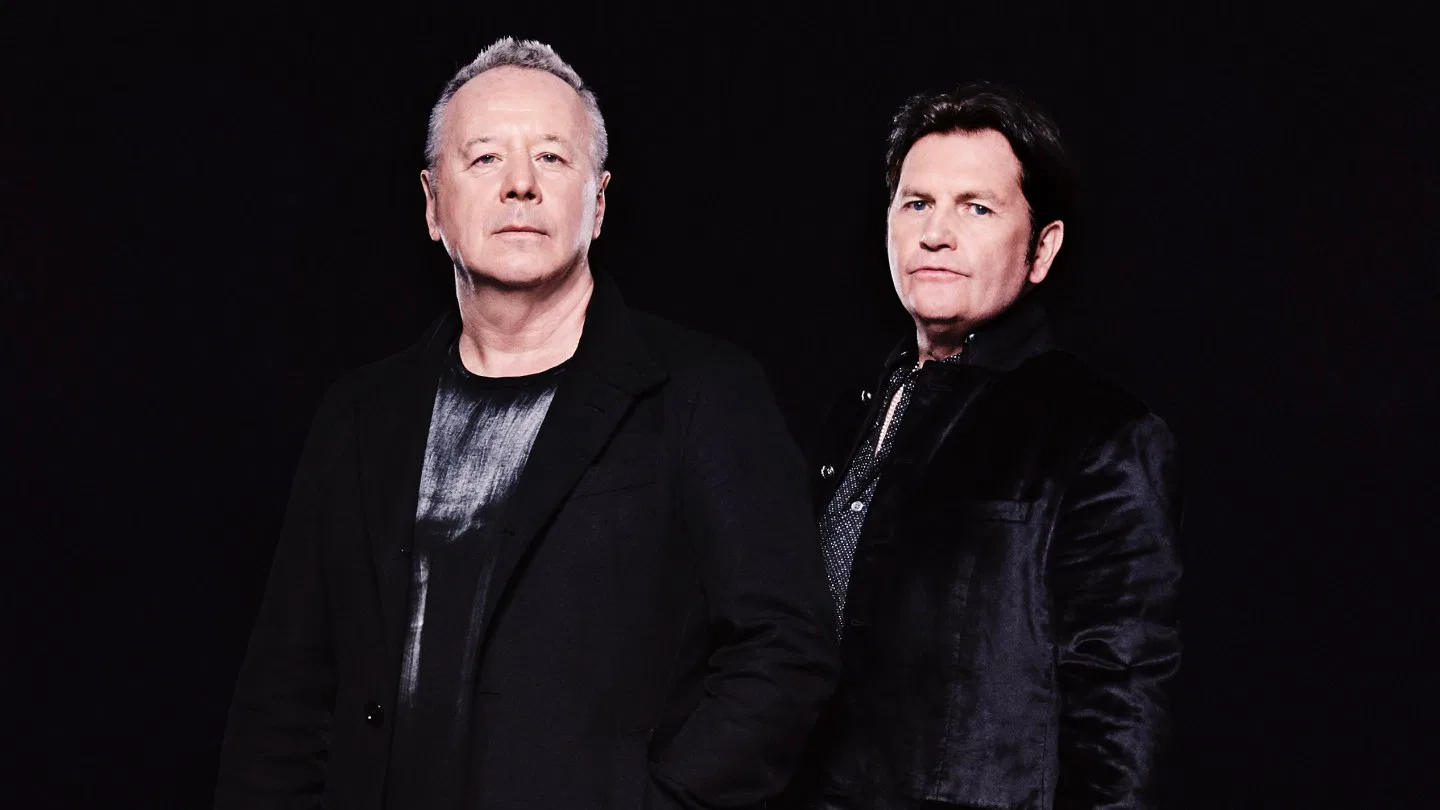
Four decades later, the band kicks off its Alive and Kicking Tour in North America this weekend and will be the focus of a new documentary set to debut in theaters next month. Kerr shares insights with THR about the “wonderful” 2024 festival gig that led to this year’s 24-date tour, his celebration of “Don’t You (Forget About Me)” reaching the top of the U.S. charts, and his choice to call Sicily his forever home.
The Hollywood Reporter:With the tour launching soon, featuring guests Modern English and Soft Cell, and stopping at Los Angeles’ KIA Forum on May 22, what motivated Simple Minds to headline a tour this year?
Jim Kerr:A year from tomorrow, we played a single show in Pasadena at the Cruel World festival to test the waters. We were overwhelmed by the warm reception. Not only did we notice it, but within days, Live Nation reached out with an opportunity to return to America. There has been a significant imbalance in how much Simple Minds have toured the U.S. compared to other places, so we were thrilled to get this chance again. And here we are.
I attended Cruel World. You performed against a stunning sunset, and the crowd was electric! Were you surprised by that reaction?
That’s right. While we have dedicated fans here who really appreciate the band, there was something special in the atmosphere that day. Before we went on, we saw a larger crowd than we’d anticipated. When we took the stage, it felt like, Oh, God, are we in Europe here?! It was reminiscent of the experiences we’re more familiar with there.
You’re quite modest, but this July marks 40 years since Live Aid. Iconic acts like Bob Dylan, Led Zeppelin, and Black Sabbath performed, yet Simple Minds received one of the loudest reactions at JFK Stadium — you had the audience in the palm of your hand, even as a relatively new band in America.
From day one, we aspired to become a great live band. But being a great live act isn’t just about playing or singing well; it’s a more profound experience. When you perform, something magical happens — you connect. We dreamed of achieving that, and within a few years, we were captivating audiences. I don’t want to jinx it, but that’s been our journey. Performing live is a shared experience. Some acts keep a distance, while others, like Simple Minds, bridge that gap and create an embrace with the audience. Performing at festivals can be unpredictable; you never know about the weather or the timings. Yet we excel at festivals, managing to focus on delivering an unforgettable experience. We plan to continue doing that as we kick off the tour next weekend, starting May 16th at Cascades Amphitheatre in Ridgefield, Washington.
This Sunday marks the 40th anniversary of “Don’t You Forget About Me” hitting number one in the U.S. Do you recall where you were on May 18, 1985?
I do remember, as it’s not every day you get both a telegram and a fax announcing, “Your song’s number one on the Billboardchart.” At the time, I was in southern France. We were gearing up to work with Jimmy Iovine and Bob Clearmountain; while we had much of the music completed, Iovine encouraged me to finalize the lyrics, and I was lagging. So I took a solo trip to Southern France, sitting on the rocks with my Sony Walkman, writing what became “Alive and Kicking,” when calls came into the hotel: Looks like it’s going to be number one — prepare for this!”
When it happened, I had to open a bottle of champagne, realizing such moments don’t come often. I’m an unusual Scotsman who doesn’t drink alcohol. It’s not that I’m a goody-goody; I was open to other things, but alcohol just never sat well with me. Yet that night, I went to the hotel bar, which was empty except for me and the bartender. I asked, What’s the best champagne you have? He replied, Oh, I got this.” I said, “Open it.” He asked, “Who for?” I said, “You and me, plus anyone else who walks in.” And those who came in got a glass to join the celebration.
There’s a new number one each week, but “Don’t You (Forget About Me)” stands as an anthem for Generation X. It feels akin to “Smells Like Teen Spirit” for the ’90s.
It was a massive hit globally. Even now, radio stations frequently reach out claiming, “In our recent poll of the best song of the ’80s, we’ve lost count of how many times ‘Don’t You’ was mentioned,” which is impressive given the great number of songs from that decade. Not only was the song itself iconic, but it was tied to a film that resonates profoundly with both that generation and those that followed, especially with Judd Nelson raising his fist in triumph at the end. It’s thrilling to have a song with such significance, although initially, we were hesitant about it.
That was quite the initial hesitation!
A significant part of our reluctance stemmed from how the approach was made. It didn’t come from the record label. [Songwriter] Keith Forsey came backstage one night — to put it lightly, he had been drinking. We didn’t recognize him, and typically someone would show up wanting to collaborate, handing you a cassette. We thought, who is this guy? That cassette sat in someone’s pocket for about a month, and we didn’t follow up. Eventually, the record company reached out to us about “Alive and Kicking.” We thought, Hey, if you want to work with us, focus on this. They countered, saying, “No, that won’t work for the script,” which made sense. However, the attitude shifted when we talked to John Hughes, and Keith was much more coherent then.
What was your impression when Forsey first presented the demo?
It was decent, just a bit generic. We figured, let’s head into the studio for a few hours; after all, you miss 100% of the chances you don’t take. And it was just a handful of hours. Yet here we are, talking about it all these years later.
Tell me about the upcoming documentary, Simple Minds: Everything is Possible, premiering in U.S. theaters on June 13th.
You’ll notice a theme, as we were initially hesitant about this project too. Our concern was how to make it unique. Yet there’s a level of humility in this documentary that I find rare in rock films. The director, Joss Cowley, despite us doubting that a young person could capture the essence of our times, did it beautifully. He portrayed the monochrome scene of Glasgow in the ’70s and ’80s, highlighting where we originated and our lofty dreams. By the end, we had to admit, “Great job.”
Simple Minds is a Scottish band, but you now reside in Sicily. How did that transition happen?
You’d have to ask my parents how they managed to afford it, but they took me on a school trip when I was just under 14. Arriving in Italy, I felt like the world had burst into color; growing up in Glasgow was wonderful, yet so different. From that moment, I imagined living there someday, even though it felt far-fetched.
Interestingly, Italy was one of the earliest countries to embrace Simple Minds. However, no bands would go to Sicily due to fears of the mafia stealing equipment and withholding payments. We ventured there and had the time of our lives. I often returned to a place called
Taormina, which was featured in The White Lotus. It’s breathtaking, rich in history: Roman, Greek. By the late ‘90s, when Simple Minds weren’t as active, I thought, I’ll spend a year here. I’ll be in my Hemingway phase: I’ll learn the language and fish for swordfish. I learned the language, didn’t manage to catch any swordfish, but that’s how it began. Ever since, it has felt like home.
[ad_2]
Source link