


[ad_1]
“I just wanted to be one of The Strokes,” confessed Alex Turner on Arctic Monkeys’ 2017 track Star Treatment.
In 2001, a 15-year-old Turner was far from alone in his admiration for one of the most thrilling guitar bands of the new millennium, a group credited with revitalizing New York City’s rock ‘n’ roll scene.
During a time when the music industry was overrun with manufactured pop icons, aggressive gangsta rap, and emotionally charged nu-metal, The Strokes—a five-member band with boyband looks but dive-bar charisma—defied the trend, infusing much-needed New York cool back into guitar music.
In the wake of 9/11, New York, and particularly Manhattan, remained persistently in the spotlight. A surge of global empathy encouraged its residents to rise above recent hardships and celebrate what had once made the city the pinnacle of cool.
The Strokes’ guitarist, Albert Hammond Jr., mentioned in a 2015 interview with The Guardian: “Even though we were fans of The Velvet Underground, The Beatles, and Guided By Voices, we didn’t feel part of any wave revitalizing cool guitar bands.”
By reflecting on the past, they inadvertently glimpsed the future—their emergence sparked a garage rock revival that continues to influence young bands even 24 years later.
The Strokes originated in 1997 when school friends Julian Casablancas (lead vocals), Nick Valensi (guitar), and Fabrizio Moretti (drums) started making music together. They later added bassist Nikolai Fraiture and rounded out the lineup with Hammond Jr., a childhood friend of Casablancas’ from a boarding school in Switzerland.
While the others were New York natives, Hammond Jr. grew up in Los Angeles with his musician father, Albert Hammond, known for his work with Roy Orbison.
Hammond Jr. reflected, “I bumped into [Casablancas] in New York after moving near his workplace, and two weeks later, we were sharing an apartment.
“I looked the part, but I still needed guitar lessons. Julian wrote the songs, and from the outset, I knew we’d find success.”
The band made their debut with a look that stood in stark contrast to nu-metal—a combination of ’70s leather jackets, fitted jeans, suit blazers, and ties.
These guys exuded style and charisma, sporting disheveled hair and vintage guitars.
Their sound echoed the tradition of legendary New York bands that came before them—the intertwining guitars of Television, the simplicity of the Ramones, and the nonchalance of Blondie, with lyrics that mirrored the New York lifestyle in the spirit of Lou Reed.
The Strokes’ early performances in Manhattan’s Lower East Side have become urban legends, generating substantial word-of-mouth buzz and a few “I was there” exaggerations.
Their swift rise to rock royalty was fueled by their debut album, Is This It, and its standout single, Last Nite—a catchy pop-rock gem featuring lo-fi guitar riffs and engaging hooks, with Casablancas’ wistful lyrics cleverly juxtaposed against the upbeat, jangly guitars and an electrifying rock ’n’ roll solo.
Last Nite was initially released as part of a demo EP alongside Barely Legal and The Modern Age—the latter of which earned NME’s Song of the Week in early 2001.
This sparked a bidding war for the young band, with RCA ultimately emerging victorious. While the EP stirred some excitement in the industry, it wasn’t until the album’s launch on July 30, 2001, that Strokesmania erupted across the Atlantic.
Last Nite kicks off with Valensi’s memorable one-note, two-octave riff (C, for those curious).
Gradually, the other members join in, each contributing a unique sound, building towards a climactic section that serves both as verse and an informal chorus, with Hammond Jr. playing staccato chords reminiscent of reggae.
In this section, Casablancas delivers his signature gruff vocals, establishing himself as one of the most recognizable voices in rock, alongside legends like Eddie Vedder and Kurt Cobain.
His slurred delivery has become the band’s hallmark, making Last Nite a popular choice for karaoke.
After the verse, the track transitions into a bridge (with Valensi maintaining that C double-octave), evoking memories of Tom Petty’s 1977 classic, American Girl.
Petty acknowledged this similarity in a 2006 interview with Rolling Stone, stating, “Many rock ’n’ roll songs share similarities. Ask Chuck Berry. The Strokes took inspiration from American Girl, and I found it amusing when they admitted it.”
In a discussion about Last Nite on his YouTube channel, Justin Hawkins from The Darkness offered his take on allegations of plagiarism: “It’s a fantastic song. It’s certainly inspired by [American Girl], but bears little resemblance beyond tempo and some guitar arrangements.
“You couldn’t possibly play them acoustically and claim they’re related at all.
“That’s how one should draw influence—who better to emulate than Tom Petty and the Heartbreakers?”
Last Nite featured a trump card revealed after an instrumental bridge: Albert Hammond Jr.’s 13-second, Freddy King-inspired guitar solo, a rarity during the riff-heavy nu-metal era of the early 2000s.
This iconic solo was recognized in Total Guitar’s Greatest Guitar Solos of the 21st Century, with the magazine noting: “In an era where solos were rare, Albert Hammond Jr. gifted us this treasure—a stunning example of a solo you can sing.
“The punk rock bite originates from playing C minor pentatonic over a C major chord sequence, and the tremolo-picked doubles at the end crescendo while maintaining a laid-back vibe.”
Following the solo, the band plows through one last bridge and chorus, concluding just like they began—with Valensi’s one-note riff completing a perfectly cyclical, sub-four-minute guitar anthem, destined to remain a mainstay on rock playlists forever.
The album, Is This It, was recorded at Transporterraum Studios in Manhattan’s Lower East Village by Gordon Raphael, who had previously collaborated with the band on The Modern Age EP and proved to be the ideal partner for Casablancas’ unapologetic artistic vision.
As Raphael recalls, Casablancas encapsulated his desired sound for the album with this theme: “Imagine using a time machine to go to the future and discovering a classic album from the distant past.”
Discussing Is This It with The Guardian, Raphael commented: “It wasn’t sonically perfect, but it held a magic and emotion that was absent from the polished studio work of other bands.
“Julian was a master at delivering cryptic instructions. He’d say things like, ‘This song needs to loosen its tie a bit.’ He wanted his voice to sound ‘like your favorite blue jeans—not completely torn, but comfortable and lived-in.’”
Throughout the recording sessions, Casablancas sang into an Audio-Technica 4033 microphone, running it through either an Avalon 737 tube preamp and compressor or his own Peavey practice amp for a thick, distorted quality, proudly showcasing their love for lo-fi indie.
In the book Meet Me In The Bathroom, which offers a retrospective of the early 2000s New York music scene (named after a Strokes song), The Killers’ drummer Ronnie Vannucci Jr. remarked: “I remember hearing Is This It. I thought, ‘Wow, this is so cool. It sounds like headphone bleed, yet it’s fantastic.’ They didn’t care, and I appreciated that.”
Raphael added: “While we were recording the album, the label visited and criticized the sound quality, claiming I was ruining Julian’s voice and jeopardizing the band’s future. It was incredibly fulfilling when the album turned into a modern classic.”
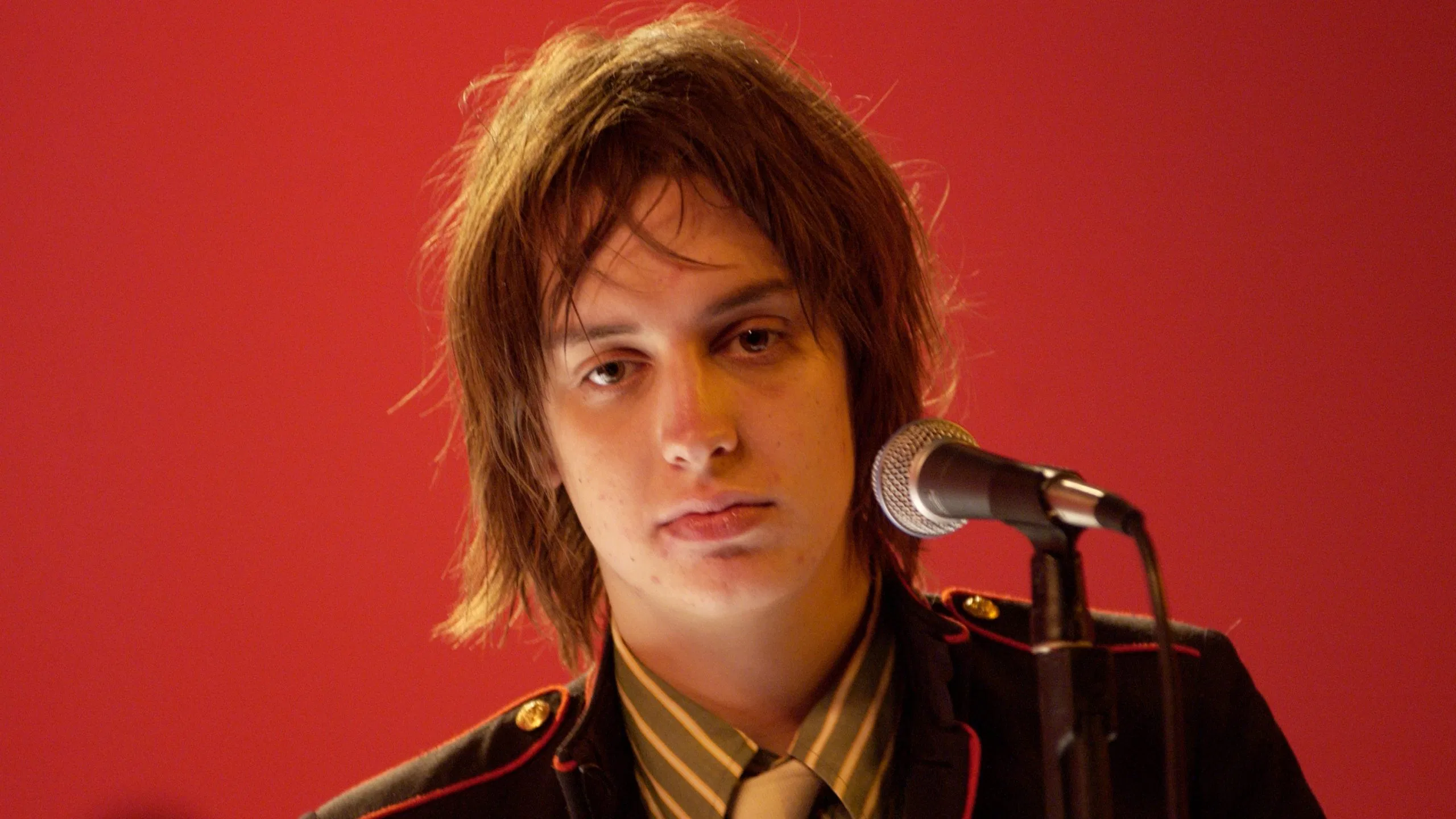
As iconic as Last Nite itself is the accompanying video. Directed by Roman Coppola—son of legendary filmmaker Francis Ford Coppola—the grainy, low-budget clip shunned high-concept ideas, choosing instead to show the band performing in their own clothes on a well-lit set.
The Strokes were initially hesitant to be featured in a music video, ultimately opting to play the song live rather than lip-sync to a studio track, harkening back to the performance videos of the 1970s before budgets soared and musicians were expected to act.
With unfiltered moments included—like Moretti inadvertently knocking down drum mics—the video encapsulated the band’s scrappy allure and provided glimpses of the raucous live shows they were perfecting.
This portrayal of the band—Converse-clad, confident, and slightly aloof—has become their lasting image, one that many still associate with the group today.
The guitarists’ affinity for vintage equipment shines through, with Valensi wielding a 1995 Epiphone Riviera and Hammond Jr. using a white 1985 Fender Stratocaster—models both players have become synonymous with throughout their careers.
The video became a staple on MTV2, with its distinctive aesthetic becoming so iconic that it was ripe for parody just a year later in Sum 41’s Still Waiting—conceived with input from Casablancas.
In the 15 years since its debut on YouTube, the Last Nite video has garnered an impressive 131 million views (and that’s in addition to the countless viewers glued to their TV screens when the song premiered in 2001).

Upon its release, Is This It garnered instant praise from critics. Joe Levy from Rolling Stone began his review with “This is the stuff of which legends are made,” while the album received a perfect score from NME, with writer John Robinson calling it “one of the best and most distinctive debut albums of the last 20 years.”
Although the album eventually achieved platinum status, it didn’t initially become a commercial hit in the USA, instead finding immediate success in the UK, where it reached No.2 in the album charts, with Last Nite peaking at No.14.
In Meet Me In The Bathroom, photographer Leslie Lyons noted The Strokes’ early live shows in the UK: “By the time they hit the stage, they were already superstars. Their images flooded the English press and their performances confirmed what everyone was seeing in the photos.
“Nothing was held back from New York. The look, the sound, the energy was all there in full force.”
The band had already ignited interest during their initial UK tour, highlighted by a particularly thrilling show at London’s Astoria, but performances that summer at T in the Park and Reading and Leeds festivals catapulted the band into the UK spotlight. Remarkably, they returned to headline Reading and Leeds just one year later.
New York City and the UK both embraced The Strokes, and although it took longer, the rest of America eventually caught on.
In January 2002, The Strokes performed Last Nite and Hard to Explain on Saturday Night Live (enthusiastically introduced by music lover Jack Black), leading to a surge in US sales of Is This It, doubling its steady growth.
Discussing the band’s impact in Meet Me In The Bathroom, journalist Marc Spitz remarked: “The Strokes were making New York travel with them. I witnessed kids in Connecticut, Maine, Philadelphia, and DC looking like they’d been partying on Avenue A all night. Sixteen-year-olds with white belts, Converse shoes, and greasy hair…
“They discovered a band they aspired to be like—they found their band.”
The success of Is This It—partly due to Last Nite’s popularity—established the band as a household name, with their 2003 album Room On Fire hitting No.2 on the UK charts and No.4 on the US Billboard 200.
Many New York bands gained prominence in The Strokes’ wake, including Interpol, The Yeah Yeah Yeahs, and LCD Soundsystem.
Meanwhile, in Las Vegas, a little-known band called The Killers underwent a creative reset after hearing The Strokes, with frontman Brandon Flowers admitting he discarded almost all the band’s songs as they didn’t measure up to the standard of Is This It.
The media’s obsession with the group was so immense that they became the standard against which every new band was measured, with Kings of Leon even branded the “Southern-fried Strokes.”
Across the ocean, The Strokes’ reputation spurred a wave of UK acts that began to gain ground, including Franz Ferdinand, The Libertines, The Cribs, and Razorlight; in the case of Arctic Monkeys, they formed directly in their wake.
Speaking to NME in 2011, Alex Turner shared his thoughts on the influence of Is This It: “I used to play [it] constantly in college when our band was forming. So many people loved them, so many bands that came out sounded like them.
“I remember consciously trying not to mimic The Strokes, deliberately removing elements from songs that felt too similar, yet I still adored that album.”
However, despite being arguably the most influential rock song of the early 21st century, Last Nite has edged dangerously close to the ‘overplayed’ label.
In fact, it may no longer be the ‘cool’ favorite among diehard fans. A glance at the band’s unofficial subreddit suggests Someday, Hard To Explain, and 12:51 as true fan favorites.
That said, Last Nite remains an essential live staple for the band to this day.
In a situation reminiscent of Radiohead’s relationship with Creep, Casablancas seems to have outgrown his band’s breakout hit. He remarked to The Guardian in 2024: “Last Nite feels pretty dead to me. I’m not entirely sure why.
“Some other tracks generate similar crowd reactions but don’t make me feel as fatigued. I think if I heard it on the radio, I’d probably switch it off.”
Despite Casablancas’ feelings, the lasting allure of Last Nite can’t be disputed.
With over 725 million streams on Spotify, it dwarfs the group’s other tracks, with Reptilia coming in second with roughly 100 million fewer listens. Perhaps Casablancas himself put it best in Last Nite’s Petty-referencing bridge: “In spaceships they won’t understand/And me, I ain’t ever gonna understand…”
Currently, the five members of The Strokes pursue various other projects, coming together occasionally for festival performances and sporadically to create new music, yet for many, the band will always be defined by their monumental impact around the turn of the century.
As Joe Colly wrote for Pitchfork’s 200 Best Albums of the 2000s: “You capture this kind of lightning in a bottle only once.”
[ad_2]
Source link