



[ad_1]
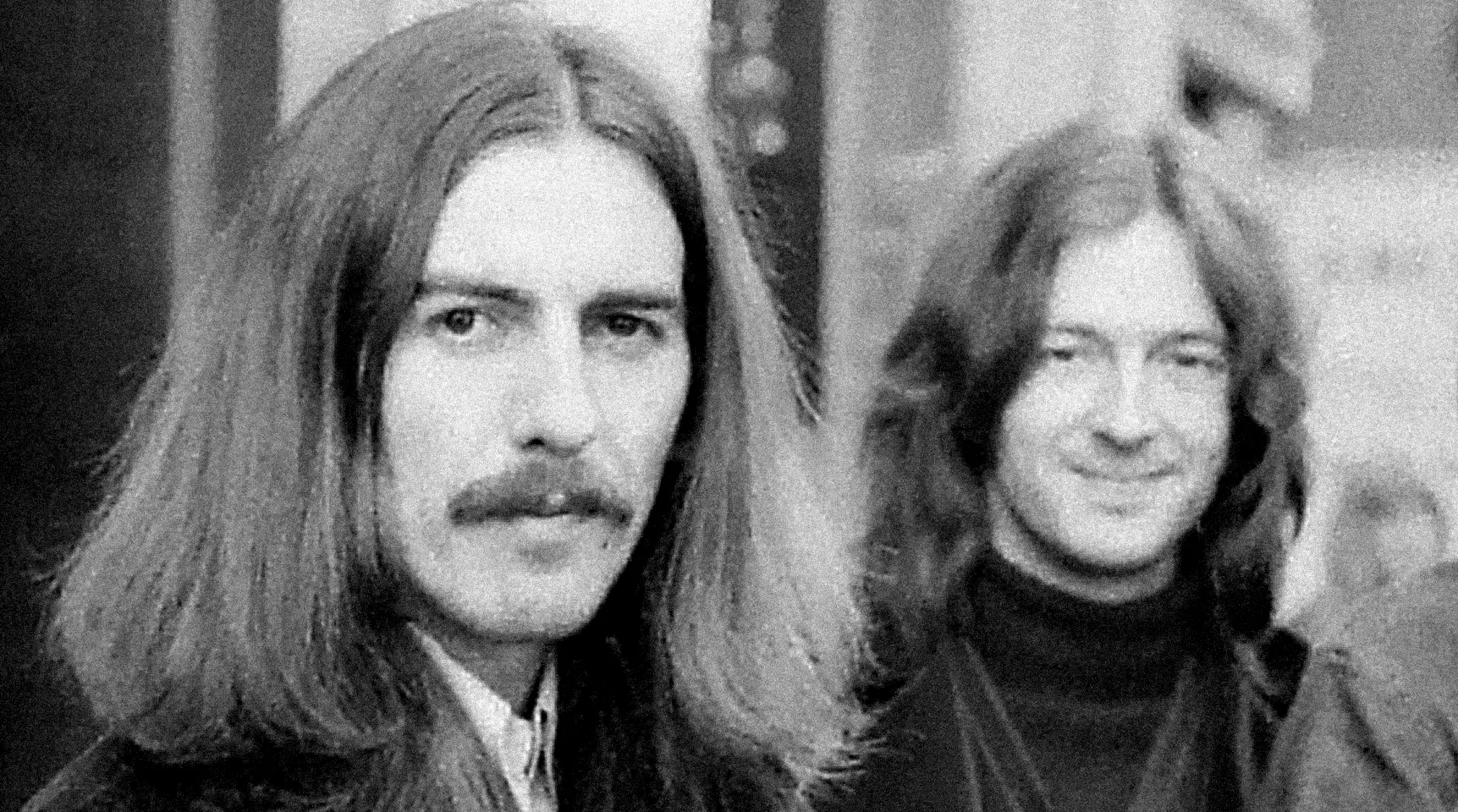
The narrative surrounding the close friendship between George Harrison and Eric Clapton has been rekindled with the revelation that they once shared a rare 1913 Gibson Style O guitar. This acoustic instrument, which was listed for sale on Reverb.com this week for nearly $1 million, played a role in the creation of “Badge,” their collaboration featured on Cream’s Goodbye. The guitar was affectionately nicknamed Pattie, a somewhat cheeky nod to Pattie Boyd, who was first married to Harrison and later to Clapton.
Prior to the guitar’s appearance on Reverb, even die-hard Beatles enthusiasts were largely unaware of its existence, adding a new, albeit minor, piece to their musical legacy.
What often goes unnoticed in the tale of Harrison and Clapton’s camaraderie is how both men acted as pillars of support during 1968, a pivotal year as they navigated fresh developments in their careers. Cream had reached its conclusion, leaving Clapton feeling uncertain about his solo future.
During this time, Harrison, who had spent two years immersed in studying the sitar and neglecting his guitar, decided to refocus on the instrument, realizing he would not achieve mastery of the sitar. Additionally, Harrison had reached a tipping point as the overlooked third songwriter in the Beatles.
This became particularly evident just a month prior to their writing session for “Badge” in October 1968 when, on September 6, Harrison invited Clapton to contribute uncredited lead guitar on Harrison’s “While My Guitar Gently Weeps,” featured on the Beatles’ White Album. The group had already recorded it once, but Harrison felt dissatisfied with the lackluster performance—an unfortunately common reaction to his contributions.
His choice to bring Clapton into the studio without prior notice marked a seminal moment of breaking away from the group’s insular dynamics.
The roots of Harrison and Clapton’s friendship precede their White Album session. They first crossed paths in December 1964 while Clapton, a member of the Yardbirds, was part of the lineup for the Beatles’ Christmas show at London’s Hammersmith Odeon. Their acquaintance blossomed over the ensuing years.

During the time of the White Album sessions, Clapton was residing at the Pheasantry, an 18th-century establishment in Chelsea, London, a favorite among artists and celebrities, recently transformed into apartments and a nightclub. Harrison was a regular visitor, often sharing acetates of the Beatles’ newest tracks.
“At times, I would go to George’s house in Esher, and we’d play guitars and take acid; gradually, a friendship started to develop,” Clapton recounted in Clapton: The Autobiography.
By the moment Clapton contributed to the White Album, Harrison was growing increasingly frustrated with his bandmates. His song “Not Guilty” had not been well-received by John Lennon and Paul McCartney, and the recording sessions for “While My Guitar Gently Weeps” were going poorly. After leading the group through a take of the song, Harrison felt dissatisfied and resolved to revisit the tune.
Sometimes I would go down to George’s house in Esher and we’d play our guitars and take acid, and bit by bit a friendship began to form.”
— Eric Clapton
While the Beatles ultimately captured a backing track to Harrison’s liking, he remarked, “They weren’t taking it seriously.” He returned home that night feeling despondent, convinced the song had great potential.
The following day, while driving Clapton, Harrison casually proposed that the guitarist accompany him to Abbey Road. “I asked, ‘What are you up to today?’” Harrison remembered. “’Why don’t you join me at the studio and play on this song?’ Clapton hesitated, saying, ‘Oh no—I can’t do that. Nobody’s ever played on a Beatles record, and the others wouldn’t like it.’
“I insisted, ‘It’s my song, and I want you to play on it.’”
As Clapton recalled, he didn’t even have his guitar with him and had to borrow one of Harrison’s—his Cherry Red 1957 Gibson Les Paul, known as Lucy, which he had gifted to Harrison earlier that year.

“In my view, Paul and John often dismissed both George’s and Ringo’s input in the band,” he reflected. “George consistently put forth songs for every project, only to have them sidelined.
“I believe he sought our friendship as a source of support, thinking my presence might reinforce his standing and perhaps even earn him some respect.”
My view was that Paul and John were often disparaging towards both George’s and Ringo’s contributions to the group.”
— Eric Clapton
Clapton’s involvement positively impacted the session. “Paul sat at the piano and played a lovely intro, and everyone seemed to take it more seriously,” Harrison noted.
This experience proved to be educational: the following year, during the tumultuous sessions for Let It Be, Harrison invited keyboardist Billy Preston to collaborate with the Beatles, recognizing the boost it would provide to their performance.
Ironically, Harrison’s invitation to Clapton almost backfired. On January 10, 1969, while working on Let It Be, Harrison temporarily left the Beatles following a disagreement with McCartney concerning his guitar work.
“Let’s bring in Eric,” Lennon suggested to McCartney. “He’s just as talented and not as much of a hassle.”

Lennon was clearly impressed with Clapton. In December 1968, he invited Clapton to join the Dirty Mac, a temporary supergroup that included the Rolling Stones’ Keith Richards and Mitch Mitchell of the Jimi Hendrix Experience, for a performance at the Rolling Stones Rock and Roll Circus. In the latter part of 1969, Clapton again collaborated with Lennon during an early tour of the Plastic Ono Band.
Even after that, Lennon persisted in seeking a collaboration with Clapton, even writing to him, expressing, “I genuinely feel I could help bring out your best work.”
However, Clapton doubts he would ever have been invited to join the Beatles.
“Lennon would occasionally invoke my name for clout, as though I were the top talent,” he remarked in 1998. “I don’t believe I could have been fully integrated into that dynamic since I was too connected to George.”
[ad_2]
Source link