



[ad_1]
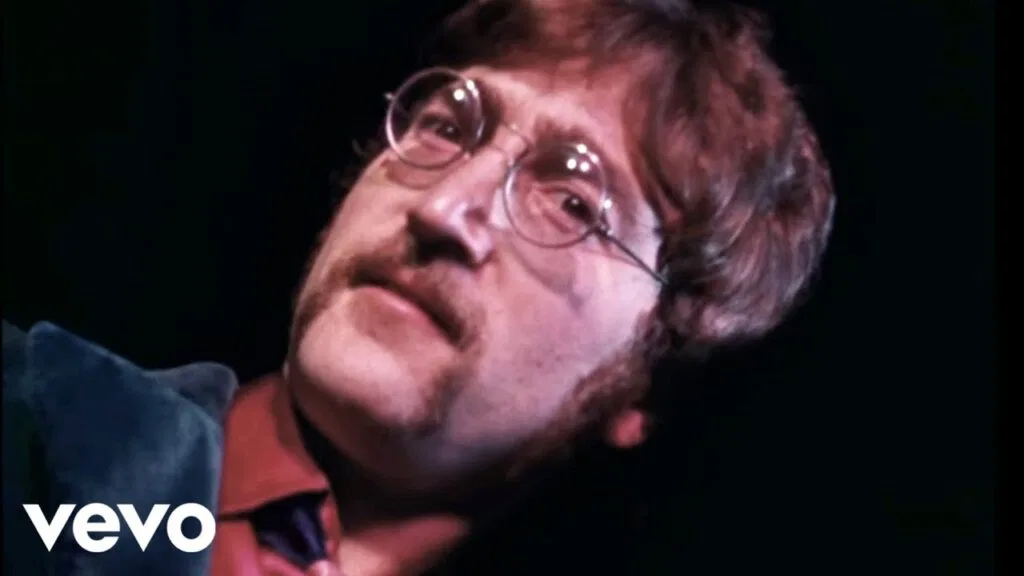
If you’re under 60, you’ve likely come across the phrase “I read the news today, oh boy” before you even listened to the song it introduces. Even after diving into the work of the Beatles, it might have taken some time to grasp what, precisely, John Lennon had read in the news. The “lucky man who made the grade” and “blew his mind out in a car” refer to the young Guinness heir Tara Browne, who tragically lost his life in a Lotus Elan. The image of 4,000 holes in the roads of Blackburn came from another article in that same edition of the Daily Mail. These are just a couple of the striking visuals found in “A Day in the Life,” which sonically reconstructs the essence of the 1960s as the Beatles experienced it.
In his recent video below, Evan Puschak, known as the Nerdwriter, labels “A Day in the Life” as “arguably the Beatles’ greatest song.” Critic Ian MacDonald is even more definitive in his book Revolution in the Head: The Beatles’ Records and the Sixties, declaring it “their finest single achievement.”
If any one element influenced its creation, it was LSD. “A song about perception — a topic central to late-period Beatles and the broader counterculture — ‘A Day in the Life’ related to ‘reality’ only to the degree that LSD revealed it to be largely subjective,” he notes. Lennon was the group’s most fervent advocate of that shortcut to enlightenment. As Puschak points out, it was Browne who first introduced Paul McCartney to the experience.
While “A Day in the Life” is primarily John’s creation, it wouldn’t be what it is without Paul’s double-time bridge, which contrasts the verses in a way that enhances their transcendence. The necessity for a transition between these distinct John and Paul sections led to George Martin commissioning a 40-piece orchestra instructed to ascend from the lowest to the highest notes, creating a collective glissando that sounds like the end of the world. Theoretically, all these elements should clash — not to mention Lennon’s references to the Albert Hall, the House of Lords, and his own role in Richard Lester’s How I Won the War. Yet, as MacDonald observes, the outcome remains one of “the most penetrating and innovative artistic reflections of its era,” capturing the experience of the young men at its core.
Related content:
A 17-Hour Chronological Playlist of Beatles Songs: 338 Tracks Let You Hear the Musical Evolution of the Iconic Band
The Experimental Movement That Created The Beatles’ Weirdest Song, “Revolution 9”
The Amazing Recording History of The Beatles’ “Here Comes the Sun”
Is “Rain” the Perfect Beatles Song?: A New Video Explores the Radical Innovations of the 1966 B-Side
The Making of the Last Beatles Song, “Now and Then”: A Short Film
A Virtual Tour of Every Place Referenced in The Beatles’ Lyrics: In 12 Minutes, Travel 25,000 Miles Across England, France, Russia, India & the US
Based in Seoul,Colin Marshall writes and broadcasts on cities, language, and culture. His projects include the Substack newsletter Books on Cities and the bookThe Stateless City: a Walk through 21st-Century Los Angeles. Follow him on the social network formerly known as Twitter at @colinmarshall.
[ad_2]
Source link