



[ad_1]
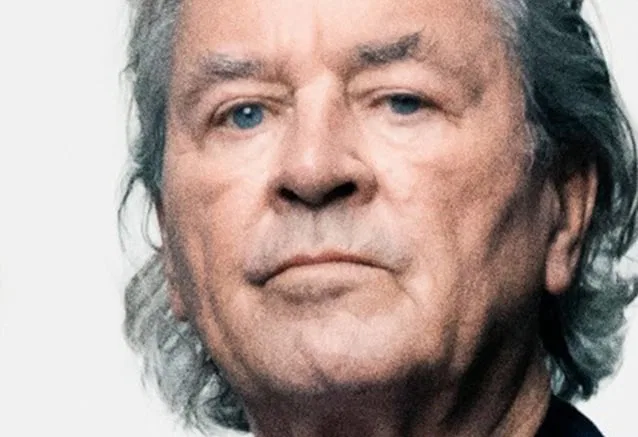
In a recent interview with Igor Miranda from Rolling Stone Brasil, Ian Gillan discussed Tony Iommi‘s intentions to remix BLACK SABBATH‘s “Born Again” album for a future release.
Released in August 1983, “Born Again” was the sole album SABBATH produced with Gillan, who is primarily recognized for his role as the vocalist of DEEP PURPLE. It also marked the final studio album from SABBATH to feature drummer Bill Ward.
Ian shared with Rolling Stone Brasil: “I think the songs on ‘Born Again’ are fantastic. I found it absurd—the mix was unbelievable… If you’ve ever seen the movie ‘[This Is] Spinal Tap’, that perfectly describes ‘Born Again’. The bass was so predominant that it couldn’t even be played on the radio. So they’re planning to remix it. It might be a bit late, but yes, likely for enthusiasts or collectors—I’m not sure. Still, there are tracks on there that I genuinely believe are outstanding.”
“Collaborating with Tony is always a blast,” Ian continued. “We had great fun creating the record… It was an extraordinary time, and I cherished the tour. It felt like the longest celebration I ever attended. It lasted a whole year.”
“I genuinely think the album is great,” Gillan added. “We’ve always acknowledged that Ozzy [Osbourne] is the voice of BLACK SABBATH, and people associate him with that. It created a somewhat strange hybrid scenario. But overall, I’m glad they’re going to remix it.”
In May 2024, Iommi spoke with SiriusXM’s “Trunk Nation With Eddie Trunk” about the lengthy delay in releasing a remixed version of “Born Again”: “Well, we eventually found the tapes, but it took years to track them down. We had no idea where they were. [My manager] pinpointed someone who had discovered them tucked away in one of the record company’s archives. I’m not certain how they got there, but they did. Now we’ve started transferring them since they’re on tape. That’s part of the plan; I’m keen to do that. And I know Ian is also eager for it to happen. Geezer [Butler, SABBATH bassist] surely feels the same.”
Iommi further mentioned that many SABBATH fans have reacquainted themselves with “Born Again” in the four decades since its debut. “It’s amusing how that occurs,” he said. “It’s similar to the Tony Martin [-era BLACK SABBATH] tracks. Folks weren’t aware of them back then, and now word-of-mouth and the Internet have piqued their interest; they eventually think, ‘Oh, yeah, that’s good.’ This has somewhat happened with ‘Born Again’. It’s funny how it evolves. A new generation emerges, and the original fans hear it again and think, ‘Oh, I forgot about that record.’ It is fascinating how it all unfolds, but it’s wonderful. That’s why I’m eager to revisit it, see what we can improve. We weren’t happy with the sound at the time, but many accepted it—especially now. Back then, we were taken aback because we left it to others while we toured, and when we finally listened to it, we were appalled. It was charting high—I believe it hit No. 4 in England. By the time we heard it, it was too late to stop anything. The sound was muffled and did not reflect what we anticipated before leaving for tour. It would be great to enhance the quality, really… There are some excellent tracks on that album. Truly.”
Iommi previously elaborated on his plans for the “Born Again” remix in a June 2023 interview with “Trunk Nation With Eddie Trunk”. When asked about the changes he anticipates during the remixing, Iommi replied: “When we recorded it initially, it sounded fantastic in the studio; we loved it. However, after going on tour, the sound somehow became dulled. I’m not sure if it was due to the pressing or something else. But I’m eager to examine that. Listening to ‘Born Again’, I notice parts that should have been amplified, such as drums or other instruments. It definitely requires adjustments because there are some superb tracks on that album. It would be nice to bring it up to date with contemporary production quality, allowing us to experience it in a new light. When you’re deeply involved with the project, it’s hard to view it objectively. We left it in someone else’s hands during the tour, then we returned, and we were shocked by the outcome. We don’t want that to repeat. I want to pull out the tapes again and give them a thorough listen to determine what needs altering to make it sound better.
In November 2022, Gillan was queried by Spain’s RockFM about the rumor that he broke “Born Again” upon receiving it. He replied: “I didn’t break it. I tossed it out the window of my car. [Laughs]
“I’ll be honest, I was disappointed,” he elaborated. “I didn’t share the same mindset as the members of BLACK SABBATH. I loved it; it was a crazy year. However, after we completed the mixes… I still have a cassette recording of the monitor mixes for ‘Born Again’, and it sounds incredible—just on a cassette. That’s the last thing I heard in the studios. When I listened to the album, I thought, ‘What is this?’ The bass was overwhelming for me.
“There’s a well-known line from a classic film called ‘This Is Spinal Tap’ that mentions BLACK SABBATH, and I’m uncertain where it originated from [laughs], but one of those lines states, ‘This album is unplayable on American radio,’ due to the heavy bass. And it really was—unplayable on the radio.
“I was disillusioned with the final mix,” Ian clarified. “I don’t know what transpired between the studio and the manufacturing stage, but something occurred. However, despite that, I truly love a number of tracks on there. ‘Trashed’ is one of my favorite rock songs ever; even more so, it’s based on a completely true story. [Laughs]”
Gillan also reflected on his performance history with SABBATH, stating: “I spent a year with BLACK SABBATH, performing Ozzy Osbourne tracks alongside those from ‘Born Again’. However, I never felt entirely comfortable doing it. It was enjoyable—I managed to sing them decently—but I didn’t sound like Ozzy. There was something a bit off.”
After the exit of lead singer Ronnie James Dio and drummer Vinny Appice following the studio version of “Live Evil”, BLACK SABBATH sought another lead vocalist to fill the significant gap left at the front of the stage. They turned to Gillan.
The resulting album and live tour uniquely defined a fascinating chapter in heavy metal history. Much of this phase of BLACK SABBATH has become rock folklore and served as inspiration for the documentary film “This Is Spinal Tap”. From the oversized stage recreation of Stonehenge, which proved too large for several venues, to employing a dwarf to portray the “devil-baby” from the album cover, BLACK SABBATH entered realms of the surreal.
While the acclaimed “Born Again” album and subsequent tour rekindled interest and kept the SABBATH legacy alive, this partnership was ultimately more rooted in camaraderie and mutual respect than in a lasting musical bond. Following one tour, Ian Gillan would eventually depart to reunite with his former bandmates for the Mk. II reunion of DEEP PURPLE, leaving BLACK SABBATH once again looking ahead to find another lead vocalist.
For Iommi, Geezer Butler, Ward, Gillan, and keyboardist Geoff Nicholls, work began swiftly in May of ’83 at Manor Studios located in the village of Shipton-on-Cherwell, Oxfordshire. The album, produced by BLACK SABBATH and co-producer Robin Black, who had also worked on 1975’s “Sabotage”, 1976’s “Technical Ecstasy”, and 1978’s “Never Say Die”, marked a radical shift from the bleak atmospheres and dark lyrical themes that defined their identity and inspired numerous successors.
Gillan‘s songwriting approach reflected a lighter perspective compared to the main themes previously pursued by Butler. The album’s opening track “Trashed” was inspired by Gillan‘s drunken escapade across the Manor‘s grounds in Bill Ward‘s car, which narrowly avoided catastrophe. “Disturbing The Priest” stemmed from a studio door being left ajar during playback, leading to a local vicar entering to request that the volume be lowered as it was distracting choir practice in a neighboring village.
Despite its quirky presentation, “Born Again” remained quintessentially SABBATH. Musically intricate and laced with an unmistakable hint of brimstone, the album offers an exhilarating glimpse into an alternative experience.
In a 2018 interview with SiriusXM, Gillan recounted that “Born Again” was initiated following a night of drinks at the Bear Inn, one of the oldest pubs in Oxford, England.
“It all started because we got intoxicated together one night,” the DEEP PURPLE frontman recalled. “I met for drinks with Tony and Geezer, and we ended up under the table. My memory of what happened afterward is vague. The next day, my manager called, saying, ‘Shouldn’t you inform me if you’re making decisions like this?’ I retorted, ‘What are you talking about?’ He elaborated, ‘Apparently, you… I just received a call. You agreed to join SABBATH.’ That’s how it unfolded. At that time, I was somewhat adrift, having just wrapped up with my own band and PURPLE being inactive. So we devised a one-year plan: an album and a tour. No one knew what would happen next, so I literally pitched my tent at the old manor in Oxfordshire. We made the album. I barely interacted with them; they were nocturnal, sleeping through the day and working all night. I’d wake up in the morning, make breakfast, head to the studio to hear what they had recorded during the night, and write songs based on that. That’s how the album came together.”
Gillan described the process of creating “Born Again” as “a challenge for me. It felt reminiscent of performing in [Andrew Lloyd Webber‘s rock opera] ‘Jesus Christ Superstar’ or singing alongside [opera singer Luciano] Pavarotti; it was fundamentally different,” he elaborated. “But Tony is such a phenomenal songwriter. You know what you’re getting with Tony. He’s direct, and that’s how he developed from the early stages.
“I found it easy to collaborate with [Tony],” Ian continued. “We created a few solid tracks. There was always a storyline. My favorite song from that album is ‘Trashed’, which recounts a true story about a racetrack, excessive drinking, and a wild car crash. Those were thrilling times.”
The second track on “Born Again” was a brief instrumental dubbed “Stonehenge”, and during SABBATH‘s 1983 tour, they humorously had to abandon a Stonehenge stage concept because the set pieces were far too large.
“We collaborated with a production company called Light And Sound Design; they were based in Birmingham, where the band originated,” Gillan recalled. “After rehearsal one day, we had a meeting in the office, and while walking through the corridors, one of the crew asked, ‘By the way, does anyone have a concept for a stage set?’ Geezer Butler replied, ‘Yeah. Stonehenge.’ The crew member responded, ‘That sounds incredible. How do you envision it?’ Geezer said, ‘Well, lifesize, of course.’ We didn’t quite achieve lifesize, but it was around two-thirds scale. However, we could never fit it all on stage. We played at some massive arenas and stadiums, but it wasn’t possible to set it all up. Some of the monoliths ended up lying around in docklands somewhere and are rumored to be scattered worldwide.”
A cherished classic among devoted SABBATH fans, “Born Again” was re-released in the spring of 2011 as a special two-CD set that included a live performance from the Reading Festival in 1983.
At the time of its original release, “Born Again” experienced commercial success, ranking as the highest-charting BLACK SABBATH album in the United Kingdom since “Sabbath Bloody Sabbath” and becoming an American Top 40 hit. Nonetheless, it marked the first BLACK SABBATH album without any RIAA certification (gold or platinum) in the U.S.
[ad_2]
Source link